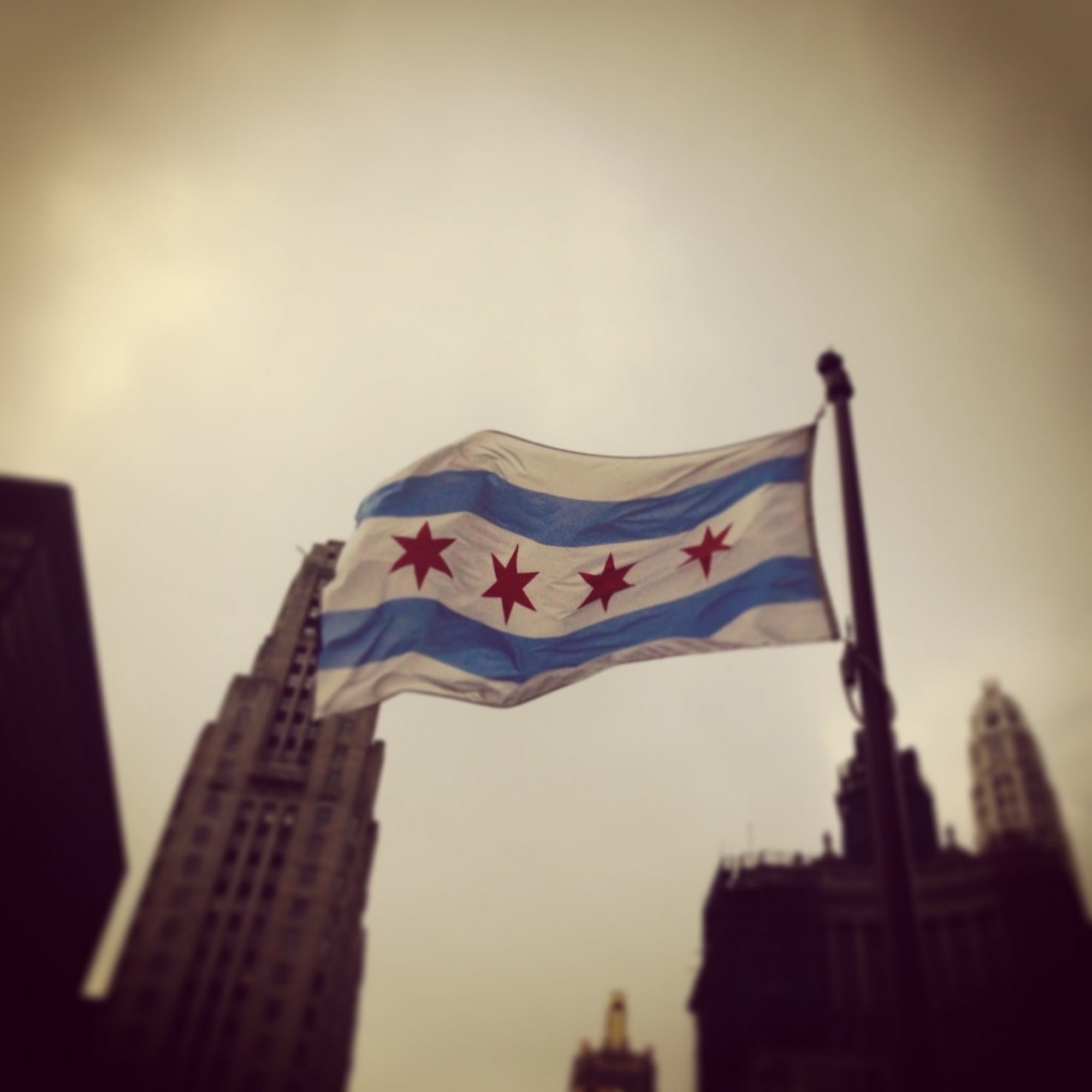
MLK Day

“I am happy to join with you today in what will go down in history as the greatest demonstration for freedom in the history of our nation.

Five score years ago, a great American, in whose symbolic shadow we stand today, signed the Emancipation Proclamation. This momentous decree came as a great beacon light of hope to millions of Negro slaves who had been seared in the flames of withering injustice. It came as a joyous daybreak to end the long night of their captivity.

But one hundred years later, the Negro still is not free. One hundred years later, the life of the Negro is still sadly crippled by the manacles of segregation and the chains of discrimination. One hundred years later, the Negro lives on a lonely island of poverty in the midst of a vast ocean of material prosperity. One hundred years later, the Negro is still languished in the corners of American society and finds himself an exile in his own land. And so we’ve come here today to dramatize a shameful condition.

In a sense we’ve come to our nation’s capital to cash a check. When the architects of our republic wrote the magnificent words of the Constitution and the Declaration of Independence, they were signing a promissory note to which every American was to fall heir. This note was a promise that all men, yes, black men as well as white men, would be guaranteed the “unalienable Rights” of “Life, Liberty and the pursuit of Happiness.” It is obvious today that America has defaulted on this promissory note, insofar as her citizens of color are concerned. Instead of honoring this sacred obligation, America has given the Negro people a bad check, a check which has come back marked “insufficient funds.”

But we refuse to believe that the bank of justice is bankrupt. We refuse to believe that there are insufficient funds in the great vaults of opportunity of this nation. And so, we’ve come to cash this check, a check that will give us upon demand the riches of freedom and the security of justice.

We have also come to this hallowed spot to remind America of the fierce urgency of Now. This is no time to engage in the luxury of cooling off or to take the tranquilizing drug of gradualism. Now is the time to make real the promises of democracy. Now is the time to rise from the dark and desolate valley of segregation to the sunlit path of racial justice. Now is the time to lift our nation from the quicksands of racial injustice to the solid rock of brotherhood. Now is the time to make justice a reality for all of God’s children.

It would be fatal for the nation to overlook the urgency of the moment. This sweltering summer of the Negro’s legitimate discontent will not pass until there is an invigorating autumn of freedom and equality. Nineteen sixty-three is not an end, but a beginning. And those who hope that the Negro needed to blow off steam and will now be content will have a rude awakening if the nation returns to business as usual. And there will be neither rest nor tranquility in America until the Negro is granted his citizenship rights. The whirlwinds of revolt will continue to shake the foundations of our nation until the bright day of justice emerges.

But there is something that I must say to my people, who stand on the warm threshold which leads into the palace of justice: In the process of gaining our rightful place, we must not be guilty of wrongful deeds. Let us not seek to satisfy our thirst for freedom by drinking from the cup of bitterness and hatred. We must forever conduct our struggle on the high plane of dignity and discipline. We must not allow our creative protest to degenerate into physical violence. Again and again, we must rise to the majestic heights of meeting physical force with soul force.

The marvelous new militancy which has engulfed the Negro community must not lead us to a distrust of all white people, for many of our white brothers, as evidenced by their presence here today, have come to realize that their destiny is tied up with our destiny. And they have come to realize that their freedom is inextricably bound to our freedom.

We cannot walk alone.

And as we walk, we must make the pledge that we shall always march ahead.

We cannot turn back.

There are those who are asking the devotees of civil rights, “When will you be satisfied?” We can never be satisfied as long as the Negro is the victim of the unspeakable horrors of police brutality. We can never be satisfied as long as our bodies, heavy with the fatigue of travel, cannot gain lodging in the motels of the highways and the hotels of the cities. *We cannot be satisfied as long as the negro’s basic mobility is from a smaller ghetto to a larger one. We can never be satisfied as long as our children are stripped of their self-hood and robbed of their dignity by a sign stating: “For Whites Only.”* We cannot be satisfied as long as a Negro in Mississippi cannot vote and a Negro in New York believes he has nothing for which to vote. No, no, we are not satisfied, and we will not be satisfied until “justice rolls down like waters, and righteousness like a mighty stream.”

I am not unmindful that some of you have come here out of great trials and tribulations. Some of you have come fresh from narrow jail cells. And some of you have come from areas where your quest — quest for freedom left you battered by the storms of persecution and staggered by the winds of police brutality. You have been the veterans of creative suffering. Continue to work with the faith that unearned suffering is redemptive. Go back to Mississippi, go back to Alabama, go back to South Carolina, go back to Georgia, go back to Louisiana, go back to the slums and ghettos of our northern cities, knowing that somehow this situation can and will be changed.

Let us not wallow in the valley of despair, I say to you today, my friends.

And so even though we face the difficulties of today and tomorrow, I still have a dream. It is a dream deeply rooted in the American dream.

I have a dream that one day this nation will rise up and live out the true meaning of its creed: “We hold these truths to be self-evident, that all men are created equal.”

I have a dream that one day on the red hills of Georgia, the sons of former slaves and the sons of former slave owners will be able to sit down together at the table of brotherhood.

I have a dream that one day even the state of Mississippi, a state sweltering with the heat of injustice, sweltering with the heat of oppression, will be transformed into an oasis of freedom and justice.

I have a dream that my four little children will one day live in a nation where they will not be judged by the color of their skin but by the content of their character.

I have a dream today!

I have a dream that one day, down in Alabama, with its vicious racists, with its governor having his lips dripping with the words of “interposition” and “nullification” — one day right there in Alabama little black boys and black girls will be able to join hands with little white boys and white girls as sisters and brothers.

I have a dream today!

I have a dream that one day every valley shall be exalted, and every hill and mountain shall be made low, the rough places will be made plain, and the crooked places will be made straight; “and the glory of the Lord shall be revealed and all flesh shall see it together.”²

This is our hope, and this is the faith that I go back to the South with.

With this faith, we will be able to hew out of the mountain of despair a stone of hope. With this faith, we will be able to transform the jangling discords of our nation into a beautiful symphony of brotherhood. With this faith, we will be able to work together, to pray together, to struggle together, to go to jail together, to stand up for freedom together, knowing that we will be free one day.

And this will be the day — this will be the day when all of God’s children will be able to sing with new meaning:

My country ’tis of thee, sweet land of liberty, of thee I sing.
Land where my fathers died, land of the Pilgrim’s pride,
From every mountainside, let freedom ring!

And if America is to be a great nation, this must become true.

And so let freedom ring from the prodigious hilltops of New Hampshire.
Let freedom ring from the mighty mountains of New York.
Let freedom ring from the heightening Alleghenies of Pennsylvania.
Let freedom ring from the snow-capped Rockies of Colorado.
Let freedom ring from the curvaceous slopes of California.

But not only that:

Let freedom ring from Stone Mountain of Georgia.
Let freedom ring from Lookout Mountain of Tennessee.
Let freedom ring from every hill and molehill of Mississippi.
From every mountainside, let freedom ring.

And when this happens, when we allow freedom ring, when we let it ring from every village and every hamlet, from every state and every city, we will be able to speed up that day when all of God’s children, black men and white men, Jews and Gentiles, Protestants and Catholics, will be able to join hands and sing in the words of the old Negro spiritual:

Free at last! Free at last!
Thank God Almighty, we are free at last!”

— Dr. Martin Luther King, Jr.

Repost from 2008

Murder in the City


Chicago was the Murder Capital of the US in 2008 with 510 murders, quite impressive. New York beat us in quantity (522) but we beat them in efficiency. For those of you that think Chicago is a dangerous place to visit or live, most of them happened in areas of the city most people would never go to anyway. If you live on the North side or downtown, you were relatively safe last year.

RedEye

My 2009 New Year’s Resolutions

My 2009 New Year’s Resolutions (Updated 1/15 with Bonus Resolutions)

  • Travel internationally (not for work)
  • Stop using the F-Bomb
  • Start climbing/bouldering again
  • Read more books (actually, listen to more books via audible.com)
  • Less drinking
  • Run a 5k, 10k, Half-Marathons 1 2, and a Marathon 1 or 2 or 3
  • Stick to a budget
  • Try a new restaurant every other week
  • Bikram
  • Spend more time outside
  • Drink more water
  • Cook more
  • Masquerade Ball & Booze Cruise
  • Blog more
  • Redesign ChiCityEvents.net site
  • One hundred push ups
  • Bonus Resolution, do the Chicago Triathlon Sprint distance
  • Bonus #2, take a photography class

I’m Not One Of Those ‘Love Thy Neighbor’ Christians

Everybody has this image of “crazy Christians” based on what they hear in the media, but it’s just not true. Most Christians are normal, decent folks. We don’t all blindly follow a bunch of outdated biblical tenets or go all fanatical about every bit of dogma. What I’m trying to say is, don’t let the actions of a vocal few color your perceptions about what the majority of us are like.

Like me. I may be a Christian, but it’s not like I’m one of those wacko “love your neighbor as yourself ” types.

God forbid!

I’m here to tell you there are lots of Christians who aren’t anything like the preconceived notions you may have. We’re not all into “turning the other cheek.” We don’t spend our days committing random acts of kindness for no credit. And although we believe that the moral precepts in the Book of Leviticus are the infallible word of God, it doesn’t mean we’re all obsessed with extremist notions like “righteousness” and “justice.”

My faith in the Lord is about the pure, simple values: raising children right, saying grace at the table, strictly forbidding those who are Methodists or Presbyterians from receiving communion because their beliefs are heresies, and curing homosexuals. That’s all. Just the core beliefs. You won’t see me going on some frothy-mouthed tirade about being a comfort to the downtrodden.

I’m a normal Midwestern housewife. I believe in the basic teachings of the Bible and the church. Divorce is forbidden. A woman is to be an obedient subordinate to the male head of the household. If a man lieth down with another man, they shall be taken out and killed. Things everybody can agree on, like the miracle of glossolalia that occurred during Pentecost, when the Apostles were visited by the Holy Spirit, who took the form of cloven tongues of fire hovering just above their heads. You know, basic common sense stuff.

But that doesn’t mean I think people should, like, forgive the sins of those who trespass against them or anything weird like that.

We’re not all “Jesus Freaks” who run around screaming about how everyone should “Judge not lest ye be judged,” whine “Blessed are the meek” all the time, or drone on and on about how we’re all equal in the eyes of God! Some of us are just trying to be good, honest folks who believe the unbaptized will roam the Earth for ages without the comfort of God’s love when Jesus Christ our Lord and Savior returns on Judgment Day to whisk the righteous off to heaven.

Now, granted, there are some Christians on the lunatic fringe who take their beliefs a little too far. Take my coworker Karen, for example. She’s way off the deep end when it comes to religion: going down to the homeless shelter to volunteer once a month, donating money to the poor, visiting elderly shut-ins with the Meals on Wheels program—you name it!

But believe me, we’re not all that way. The people in my church, for the most part, are perfectly ordinary Americans like you and me. They believe in the simple old-fashioned traditions—Christmas, Easter, the slow and deliberate takeover of more and more county school boards to get the political power necessary to ban evolution from textbooks statewide. That sort of thing.

We oppose gay marriage as an abomination against the laws of God and America, we’re against gun control, and we fervently and unwaveringly believe that the Jews, Muslims, and all on earth who are not born-again Pentecostalists are possessed by Satan and should be treated as such.

When it comes down to it, all we want is to see every single member of the human race convert to our religion or else be condemned by a jealous and wrathful God to suffer an eternity of agony and torture in the Lake of Fire!

I hope I’ve helped set the record straight, and I wish you all a very nice day! God bless you!

The Onion

Chicago, GQ’s City of the Year

Four Reasons Chicago Is GQ’s City of the Year

1. politics

For decades, Chicago has been a proving ground for any left-leaning midwesterner hoping to make the leap to D.C. But this year, the city made its mark as the seat of political power—and not just because the two top Democratic presidential candidates have roots there. Here are the six Windy City Democrats who are changing the way Chicago—and the rest of the country—does politics.

Richard M. Daley
mayor

As civic leader Valerie Jarrett puts it, “All roads lead to Mayor Daley.” Daley was an early proponent of the green city, overhauled public housing, and put together a multiracial coalition of business and civic leaders. He’s even working to get Chicago onto the world stage with a bid for the 2016 Olympic Games. If there’s any question as to whether Chicago residents want someone new, one need only look at last year’s election, where he won all fifty wards in the city.

David Axelrod
chief strategist for Obama

Better than anyone in or outside the Beltway, Axelrod knows how to frame a candidate for a skeptical public. In 2004 he helped a little-known state senator win a race for U.S. Senate, and he’s seen as being largely responsible for the no-drama ethos of the Obama presidential campaign. Forget James Carville and Joe Trippi; come January, Axelrod will be the party’s most sought-after consultant.

J. B. and Penny Pritzker
fund-raisers

These ultrarich siblings are the leading liberal moneymen in the city. He shilled for Hillary, and she broke fund-raising records for Obama. They wield more financial power for the Democrats than anyone else in the Midwest.

Jesse Jackson Jr. and Sandi Jackson
U.S. congressman and Chicago alderwoman

This husband and wife are a match in every way. The son of the Reverend Jesse Jackson, he’s moved from under his father’s shadow as a widely respected congressman; she beat out an entrenched machine pol for her seat in Chicago’s Seventh Ward. Odds are that one (or both) makes a play for higher office. Watching their rise, one can’t help but be reminded of another famous Democratic power couple.—sarah goldstein

2. film

The Dark Knight may end up being remembered as the final glimpse of Heath Ledger’s genius, but there was another mesmerizing presence in the year’s highest-grossing film: the city of Chicago. It was on Chicago’s expansive streets—and just as often above them—that the action unfolded. Emma Thomas, one of the film’s producers and the wife of director Christopher Nolan, explains the decision to bring Gotham to the Midwest.

“Chris had always wanted to ground Gotham in a real place and do as much on-location shooting as he could. He was looking for a city that could be larger than life. One of the amazing things about Chicago is that it’s built on different levels, and that was perfect for the action in The Dark Knight. There are so many different styles of architecture, and it all works together fantastically. Bruce Wayne’s bedroom was shot in a hotel downtown, and the party scene was in the lobby of another building. Plus, we got to do some really crazy stuff. We blew up a building; we flipped over an eighteen-wheeler. And it’s not like we were doing it on some out-of-the-way deserted street. We were doing it in the financial center of the city. All the scenes where people are evacuating—we really did that. They let us close down their streets for weeks at a time. I think one of the reasons the film feels so big is that we were able to use every inch of Chicago and make the movie feel like a complete world.”—as told to sarah goldstein

3. literature

Bellow, Sandburg, Mamet. These are some of the heavyweights who carved out Chicago’s reputation as a writer’s town. But the first two are long gone, and Mamet is living near the beach in L.A. Luckily for readers everywhere, a new crop have emerged with their own stories to tell. Jonathan Messigner, co-founder of Chicago’s independent Featherproof Books, takes us through an exceptional year in the city’s literary tradition.—sarah goldstein

The Lazarus Project
by Aleksandar Hemon

Hemon, a Bosnian native, wound up living in Chicago when Sarajevo came under siege in 1992, and by 2004 he’d mastered the English language enough to make the MacArthur Foundation come knocking with a “genius” grant. Hemon used the grant to write this year’s Lazarus Project, a brilliant novel about a Bosnian journalist in Chicago who becomes obsessed with a Jewish immigrant. The author of the year’s best book is not technically from around these parts, but we’re happy to embrace him as our own.

Demons in the Spring
by Joe Meno

Prolific South Sider Meno is the closest thing we’ve got to a literary ambassador. Demons explores the darker side of damaged adolescence and is sure to be handed to every 16-year-old Chicagoan with a learner’s permit. No one has captured the odd blend of grit and fantasy, community and danger, that comes with an urban upbringing quite like Meno.

Stop Smiling

The most literary magazine that isn’t actually a literary magazine, SS is cut from the mold of ’60s countercultural mags and dedicated to the idiosyncratic enthusiasms of its editors, who have set about reviving the old-school, Playboy-style long-form interview. With issues devoted to boxing, cult heroes, and outlaws, you’re not going to find anything like it on the rack.

4. architecture

The next American landmark isn’t just another impossibly tall megastructure; it’s a skyscraper doing a pirouette. Designed by starchitect Santiago Calatrava, the Chicago Spire, when completed (developers are predicting 2012), will be the world’s tallest residential tower—giving man the chance to live, at last, with his head in the clouds.—michael hsu

• Each of its 150 stories will be, on average, 2.44 degrees askew from the one below it. The entire building will corkscrew 360 degrees upward.

• At 2,000 feet high, the Spire will have the world’s longest elevator run. A trip to the top will cover the length of more than five football fields. Once you get there, you’ll be able to see the curvature of the earth.

• Because of its unusual shape, the 1,194 apartments in the seven-sided building will all be unique, right down to the doorknobs. Each will be designed by Calatrava, and some will bear his handprint.

• The Spire will be the thinnest supertall building ever built—about half the width of the nearby Sears Tower.

• The shape of the building will help direct wind upward, preventing gusts near the ground.

• The top floor will have a 10,000-square-foot duplex penthouse with wraparound views. On clear days, you will see four states.

• The building will have a (very long) garbage chute that automatically separates trash from recycling.

GQ

History

Hello, Chicago.

If there is anyone out there who still doubts that America is a place where all things are possible, who still wonders if the dream of our founders is alive in our time, who still questions the power of our democracy, tonight is your answer.

It’s the answer told by lines that stretched around schools and churches in numbers this nation has never seen, by people who waited three hours and four hours, many for the first time in their lives, because they believed that this time must be different, that their voices could be that difference.

It’s the answer spoken by young and old, rich and poor, Democrat and Republican, black, white, Hispanic, Asian, Native American, gay, straight, disabled and not disabled. Americans who sent a message to the world that we have never been just a collection of individuals or a collection of red states and blue states.

We are, and always will be, the United States of America.

It’s the answer that led those who’ve been told for so long by so many to be cynical and fearful and doubtful about what we can achieve to put their hands on the arc of history and bend it once more toward the hope of a better day.

It’s been a long time coming, but tonight, because of what we did on this date in this election at this defining moment change has come to America.

A little bit earlier this evening, I received an extraordinarily gracious call from Sen. McCain.

Sen. McCain fought long and hard in this campaign. And he’s fought even longer and harder for the country that he loves. He has endured sacrifices for America that most of us cannot begin to imagine. We are better off for the service rendered by this brave and selfless leader.

I congratulate him; I congratulate Gov. Palin for all that they’ve achieved. And I look forward to working with them to renew this nation’s promise in the months ahead.

I want to thank my partner in this journey, a man who campaigned from his heart, and spoke for the men and women he grew up with on the streets of Scranton and rode with on the train home to Delaware, the vice president-elect of the United States, Joe Biden.

And I would not be standing here tonight without the unyielding support of my best friend for the last 16 years the rock of our family, the love of my life, the nation’s next first lady Michelle Obama.

Sasha and Malia I love you both more than you can imagine. And you have earned the new puppy that’s coming with us to the new White House.

And while she’s no longer with us, I know my grandmother’s watching, along with the family that made me who I am. I miss them tonight. I know that my debt to them is beyond measure.

To my sister Maya, my sister Alma, all my other brothers and sisters, thank you so much for all the support that you’ve given me. I am grateful to them.

And to my campaign manager, David Plouffe, the unsung hero of this campaign, who built the best — the best political campaign, I think, in the history of the United States of America.

To my chief strategist David Axelrod who’s been a partner with me every step of the way.

To the best campaign team ever assembled in the history of politics you made this happen, and I am forever grateful for what you’ve sacrificed to get it done.

But above all, I will never forget who this victory truly belongs to. It belongs to you. It belongs to you.

I was never the likeliest candidate for this office. We didn’t start with much money or many endorsements. Our campaign was not hatched in the halls of Washington. It began in the backyards of Des Moines and the living rooms of Concord and the front porches of Charleston. It was built by working men and women who dug into what little savings they had to give $5 and $10 and $20 to the cause.

It grew strength from the young people who rejected the myth of their generation’s apathy who left their homes and their families for jobs that offered little pay and less sleep.

It drew strength from the not-so-young people who braved the bitter cold and scorching heat to knock on doors of perfect strangers, and from the millions of Americans who volunteered and organized and proved that more than two centuries later a government of the people, by the people, and for the people has not perished from the Earth.

This is your victory.

And I know you didn’t do this just to win an election. And I know you didn’t do it for me.

You did it because you understand the enormity of the task that lies ahead. For even as we celebrate tonight, we know the challenges that tomorrow will bring are the greatest of our lifetime — two wars, a planet in peril, the worst financial crisis in a century.

Even as we stand here tonight, we know there are brave Americans waking up in the deserts of Iraq and the mountains of Afghanistan to risk their lives for us.

There are mothers and fathers who will lie awake after the children fall asleep and wonder how they’ll make the mortgage or pay their doctors’ bills or save enough for their child’s college education.

There’s new energy to harness, new jobs to be created, new schools to build, and threats to meet, alliances to repair.

The road ahead will be long. Our climb will be steep. We may not get there in one year or even in one term. But, America, I have never been more hopeful than I am tonight that we will get there.

I promise you, we as a people will get there.

There will be setbacks and false starts. There are many who won’t agree with every decision or policy I make as president. And we know the government can’t solve every problem.

But I will always be honest with you about the challenges we face. I will listen to you, especially when we disagree. And, above all, I will ask you to join in the work of remaking this nation, the only way it’s been done in America for 221 years — block by block, brick by brick, calloused hand by calloused hand.

What began 21 months ago in the depths of winter cannot end on this autumn night.

This victory alone is not the change we seek. It is only the chance for us to make that change. And that cannot happen if we go back to the way things were.

It can’t happen without you, without a new spirit of service, a new spirit of sacrifice.

So let us summon a new spirit of patriotism, of responsibility, where each of us resolves to pitch in and work harder and look after not only ourselves but each other.

Let us remember that, if this financial crisis taught us anything, it’s that we cannot have a thriving Wall Street while Main Street suffers.

In this country, we rise or fall as one nation, as one people. Let’s resist the temptation to fall back on the same partisanship and pettiness and immaturity that has poisoned our politics for so long.

Let’s remember that it was a man from this state who first carried the banner of the Republican Party to the White House, a party founded on the values of self-reliance and individual liberty and national unity.

Those are values that we all share. And while the Democratic Party has won a great victory tonight, we do so with a measure of humility and determination to heal the divides that have held back our progress.

As Lincoln said to a nation far more divided than ours, we are not enemies but friends. Though passion may have strained, it must not break our bonds of affection.

And to those Americans whose support I have yet to earn, I may not have won your vote tonight, but I hear your voices. I need your help. And I will be your president, too.

And to all those watching tonight from beyond our shores, from parliaments and palaces, to those who are huddled around radios in the forgotten corners of the world, our stories are singular, but our destiny is shared, and a new dawn of American leadership is at hand.

To those — to those who would tear the world down: We will defeat you. To those who seek peace and security: We support you. And to all those who have wondered if America’s beacon still burns as bright: Tonight we proved once more that the true strength of our nation comes not from the might of our arms or the scale of our wealth, but from the enduring power of our ideals: democracy, liberty, opportunity and unyielding hope.

That’s the true genius of America: that America can change. Our union can be perfected. What we’ve already achieved gives us hope for what we can and must achieve tomorrow.

This election had many firsts and many stories that will be told for generations. But one that’s on my mind tonight’s about a woman who cast her ballot in Atlanta. She’s a lot like the millions of others who stood in line to make their voice heard in this election except for one thing: Ann Nixon Cooper is 106 years old.

She was born just a generation past slavery; a time when there were no cars on the road or planes in the sky; when someone like her couldn’t vote for two reasons — because she was a woman and because of the color of her skin.

And tonight, I think about all that she’s seen throughout her century in America — the heartache and the hope; the struggle and the progress; the times we were told that we can’t, and the people who pressed on with that American creed: Yes we can.

At a time when women’s voices were silenced and their hopes dismissed, she lived to see them stand up and speak out and reach for the ballot. Yes we can.

When there was despair in the dust bowl and depression across the land, she saw a nation conquer fear itself with a New Deal, new jobs, a new sense of common purpose. Yes we can.

When the bombs fell on our harbor and tyranny threatened the world, she was there to witness a generation rise to greatness and a democracy was saved. Yes we can.

She was there for the buses in Montgomery, the hoses in Birmingham, a bridge in Selma, and a preacher from Atlanta who told a people that “We Shall Overcome.” Yes we can.

A man touched down on the moon, a wall came down in Berlin, a world was connected by our own science and imagination.

And this year, in this election, she touched her finger to a screen, and cast her vote, because after 106 years in America, through the best of times and the darkest of hours, she knows how America can change.

Yes we can.

America, we have come so far. We have seen so much. But there is so much more to do. So tonight, let us ask ourselves — if our children should live to see the next century; if my daughters should be so lucky to live as long as Ann Nixon Cooper, what change will they see? What progress will we have made?

This is our chance to answer that call. This is our moment.
advertisement

This is our time, to put our people back to work and open doors of opportunity for our kids; to restore prosperity and promote the cause of peace; to reclaim the American dream and reaffirm that fundamental truth, that, out of many, we are one; that while we breathe, we hope. And where we are met with cynicism and doubts and those who tell us that we can’t, we will respond with that timeless creed that sums up the spirit of a people: Yes, we can.

Thank you. God bless you. And may God bless the United States of America.

And it’s root, root, root for the Cubbies!!!

Courtesy of Stuff White People Like #30

One of the best things someone can do to gain the respect and trust of a white person, is to attend a baseball game with them at Wrigley Field, the home of the Chicago Cubs. When most people think of the Chicago Cubs they think of tradition, ivy covered walls, Fergie Jenkins & Harry Caray. A more accurate representation would be khaki shorts, frat boys & rich white business men on their iphones. The 1980s television show Perfect Strangers best illustrates this point. In the opening credits, foreigner Balky Bartokomous is taken to Wrigley Field. This was more or less symbolic of what Balky had to do, to understand white America.


Ethnic person (third from left) gaining the trust of white people

Reasons why white people like Wrigley Field
1. Experiencing tradition at a high cost
2. Located on the North Side
3. Its Trendy
4. Comfortable Surroundings

1. Experiencing tradition at a high cost

The main reason why people flock to Wrigley Field each year is the fact that it is one of the few ballparks that is trapped in time. People come to experience baseball tradition (although the definition of tradition when it comes to baseball is sketchy, remember the sport did not integrate until 1947). However this tradition comes at a high cost, which white people don’t mind. On prime dates a ticket in the bleachers costs $45. But this does not deter rich white people from enjoying the “simpler things” in life. Wrigley is an old stadium where people still pee in troths, but white people love paying top dollar to do this. They also like being around “real baseball fans”, even though most of the people in the bleachers are drunk rich frat kids that aren’t from Chicago and have no idea who Ernie Banks is. Compare that to the left field pavilion in Dodger Stadium , where tickets are $11 and the people are much more fun and less irritating However the left field pavilion is generally the hispanic section which makes it less of a tourist attraction than the Wrigley bleachers (Unlike having black friends see post #14, it is not yet cool to have Hispanic friends)

2. Located on the North Side

Wrigley Field is located on the North Side of Chicago. The North side is basically the gentrified, trendy part of Chicago. Also many white people listen to Jim Croce (whom most think is black) and the perception of most non-Chicago people (the majority of Cubs fans) of the Windy city is through the song “Bad. bad, Leroy Brown”

Well the south side of chicago
Is the baddest part of town
And if you go down there
You better just beware

Of a man named leroy brown

This is one of the main reasons why people do not venture to watch the Chicago White Sox. They are located on the South Side which is viewed as the “baddest part of town” where of course black people named “Leroy” live.

3. Its Trendy

Liking the Cubs right now is trendy. They haven’t won a World Series since 1908, they are located on the North Side and celebrities like them. Bill Murray, John Cusak, and Hillary Clinton (although she flip flops between them and the Yankees) are all Cubs fans. One should keep up to date on things that are trendy in order to befriend more white people. ie) eating expensive Indian food, shopping Organic, or going on a wild rose detox. So for the upcoming season, try to know at least one player on the Chicago Cubs and defend Mark Prior at all costs

4. Comfortable Surroundings

Wrigley Field is known as the Friendly Confines and white people feel comfortable there because other than Ronnie Woo Woo, most Cubs fans are white (and we are not talking about the white people that go to White Sox games). Next to a Dave Matthews Band reunion concert, one can not find a bigger collection of khaki shorts and golf shirts than the Wrigley Bleachers. Also once a friend of mine was sitting in the bleachers next to a pretty girl with an LSU sweater. She was talking about Baton Rouge and said “I love it but I can’t stand all the n%#%%ers” TRUE STORY. What is most disturbing is the fact that she said this in such a nonchalant manner. Simply put, this individual from the south finally found a place in the North where she felt her views were acceptable. I sense that if she were sitting in the Left Field Pavallion at Dodger Stadium, she would not be so open about her true feelings.

So if you find it difficult to befriend white people, it doesn’t help to know a little something about the Cubs and to suggest a trip to Wrigley Field.

MLK Day

“I am happy to join with you today in what will go down in history as the greatest demonstration for freedom in the history of our nation.

Five score years ago, a great American, in whose symbolic shadow we stand today, signed the Emancipation Proclamation. This momentous decree came as a great beacon light of hope to millions of Negro slaves who had been seared in the flames of withering injustice. It came as a joyous daybreak to end the long night of their captivity.

But one hundred years later, the Negro still is not free. One hundred years later, the life of the Negro is still sadly crippled by the manacles of segregation and the chains of discrimination. One hundred years later, the Negro lives on a lonely island of poverty in the midst of a vast ocean of material prosperity. One hundred years later, the Negro is still languished in the corners of American society and finds himself an exile in his own land. And so we’ve come here today to dramatize a shameful condition.

In a sense we’ve come to our nation’s capital to cash a check. When the architects of our republic wrote the magnificent words of the Constitution and the Declaration of Independence, they were signing a promissory note to which every American was to fall heir. This note was a promise that all men, yes, black men as well as white men, would be guaranteed the “unalienable Rights” of “Life, Liberty and the pursuit of Happiness.” It is obvious today that America has defaulted on this promissory note, insofar as her citizens of color are concerned. Instead of honoring this sacred obligation, America has given the Negro people a bad check, a check which has come back marked “insufficient funds.”

But we refuse to believe that the bank of justice is bankrupt. We refuse to believe that there are insufficient funds in the great vaults of opportunity of this nation. And so, we’ve come to cash this check, a check that will give us upon demand the riches of freedom and the security of justice.

We have also come to this hallowed spot to remind America of the fierce urgency of Now. This is no time to engage in the luxury of cooling off or to take the tranquilizing drug of gradualism. Now is the time to make real the promises of democracy. Now is the time to rise from the dark and desolate valley of segregation to the sunlit path of racial justice. Now is the time to lift our nation from the quicksands of racial injustice to the solid rock of brotherhood. Now is the time to make justice a reality for all of God’s children.

It would be fatal for the nation to overlook the urgency of the moment. This sweltering summer of the Negro’s legitimate discontent will not pass until there is an invigorating autumn of freedom and equality. Nineteen sixty-three is not an end, but a beginning. And those who hope that the Negro needed to blow off steam and will now be content will have a rude awakening if the nation returns to business as usual. And there will be neither rest nor tranquility in America until the Negro is granted his citizenship rights. The whirlwinds of revolt will continue to shake the foundations of our nation until the bright day of justice emerges.

But there is something that I must say to my people, who stand on the warm threshold which leads into the palace of justice: In the process of gaining our rightful place, we must not be guilty of wrongful deeds. Let us not seek to satisfy our thirst for freedom by drinking from the cup of bitterness and hatred. We must forever conduct our struggle on the high plane of dignity and discipline. We must not allow our creative protest to degenerate into physical violence. Again and again, we must rise to the majestic heights of meeting physical force with soul force.

The marvelous new militancy which has engulfed the Negro community must not lead us to a distrust of all white people, for many of our white brothers, as evidenced by their presence here today, have come to realize that their destiny is tied up with our destiny. And they have come to realize that their freedom is inextricably bound to our freedom.

We cannot walk alone.

And as we walk, we must make the pledge that we shall always march ahead.

We cannot turn back.

There are those who are asking the devotees of civil rights, “When will you be satisfied?” We can never be satisfied as long as the Negro is the victim of the unspeakable horrors of police brutality. We can never be satisfied as long as our bodies, heavy with the fatigue of travel, cannot gain lodging in the motels of the highways and the hotels of the cities. *We cannot be satisfied as long as the negro’s basic mobility is from a smaller ghetto to a larger one. We can never be satisfied as long as our children are stripped of their self-hood and robbed of their dignity by a sign stating: “For Whites Only.”* We cannot be satisfied as long as a Negro in Mississippi cannot vote and a Negro in New York believes he has nothing for which to vote. No, no, we are not satisfied, and we will not be satisfied until “justice rolls down like waters, and righteousness like a mighty stream.”

I am not unmindful that some of you have come here out of great trials and tribulations. Some of you have come fresh from narrow jail cells. And some of you have come from areas where your quest — quest for freedom left you battered by the storms of persecution and staggered by the winds of police brutality. You have been the veterans of creative suffering. Continue to work with the faith that unearned suffering is redemptive. Go back to Mississippi, go back to Alabama, go back to South Carolina, go back to Georgia, go back to Louisiana, go back to the slums and ghettos of our northern cities, knowing that somehow this situation can and will be changed.

Let us not wallow in the valley of despair, I say to you today, my friends.

And so even though we face the difficulties of today and tomorrow, I still have a dream. It is a dream deeply rooted in the American dream.

I have a dream that one day this nation will rise up and live out the true meaning of its creed: “We hold these truths to be self-evident, that all men are created equal.”

I have a dream that one day on the red hills of Georgia, the sons of former slaves and the sons of former slave owners will be able to sit down together at the table of brotherhood.

I have a dream that one day even the state of Mississippi, a state sweltering with the heat of injustice, sweltering with the heat of oppression, will be transformed into an oasis of freedom and justice.

I have a dream that my four little children will one day live in a nation where they will not be judged by the color of their skin but by the content of their character.

I have a dream today!

I have a dream that one day, down in Alabama, with its vicious racists, with its governor having his lips dripping with the words of “interposition” and “nullification” — one day right there in Alabama little black boys and black girls will be able to join hands with little white boys and white girls as sisters and brothers.

I have a dream today!

I have a dream that one day every valley shall be exalted, and every hill and mountain shall be made low, the rough places will be made plain, and the crooked places will be made straight; “and the glory of the Lord shall be revealed and all flesh shall see it together.”²

This is our hope, and this is the faith that I go back to the South with.

With this faith, we will be able to hew out of the mountain of despair a stone of hope. With this faith, we will be able to transform the jangling discords of our nation into a beautiful symphony of brotherhood. With this faith, we will be able to work together, to pray together, to struggle together, to go to jail together, to stand up for freedom together, knowing that we will be free one day.

And this will be the day — this will be the day when all of God’s children will be able to sing with new meaning:

My country ’tis of thee, sweet land of liberty, of thee I sing.
Land where my fathers died, land of the Pilgrim’s pride,
From every mountainside, let freedom ring!

And if America is to be a great nation, this must become true.

And so let freedom ring from the prodigious hilltops of New Hampshire.
Let freedom ring from the mighty mountains of New York.
Let freedom ring from the heightening Alleghenies of Pennsylvania.
Let freedom ring from the snow-capped Rockies of Colorado.
Let freedom ring from the curvaceous slopes of California.

But not only that:

Let freedom ring from Stone Mountain of Georgia.
Let freedom ring from Lookout Mountain of Tennessee.
Let freedom ring from every hill and molehill of Mississippi.
From every mountainside, let freedom ring.

And when this happens, when we allow freedom ring, when we let it ring from every village and every hamlet, from every state and every city, we will be able to speed up that day when all of God’s children, black men and white men, Jews and Gentiles, Protestants and Catholics, will be able to join hands and sing in the words of the old Negro spiritual:

Free at last! Free at last!
Thank God Almighty, we are free at last!”

— Dr. Martin Luther King, Jr.

The Least Religious Countries in the World

When you travel to Europe or Asia, don’t be surprised to find that many Europeans don’t believe in God.

The survey concluded that “high levels of organic atheism are strongly correlated with high levels of societal health, such as low homicide rates, low poverty rates, low infant mortality rates, and low illiteracy rates, as well as high levels of educational attainment, per capita income, and gender equality. Most nations characterized by high degrees of individual and societal security have the highest rates of organic atheism, and conversely, nations characterized by low degrees of individual and societal security have the lowest rates of organic atheism.

Here is the Top 10 least religious countries in the world:

read more | digg story